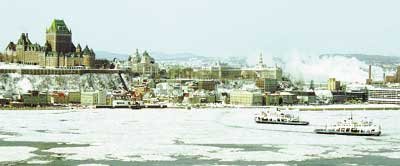
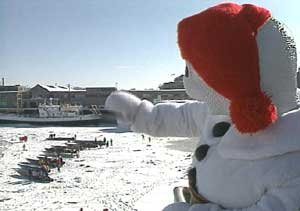
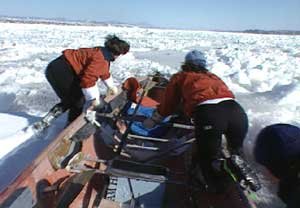
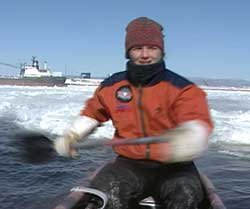
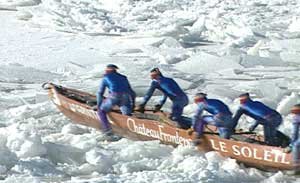
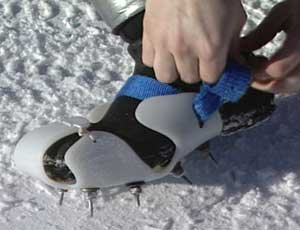
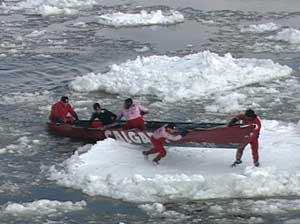
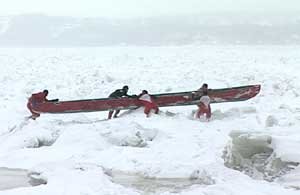
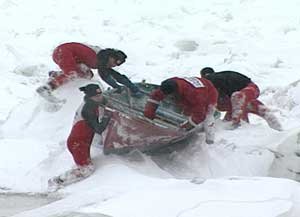
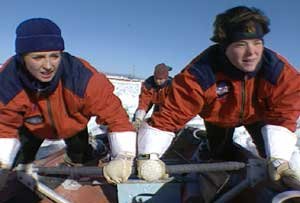
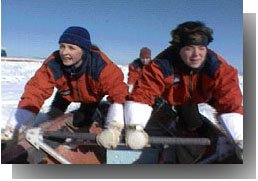
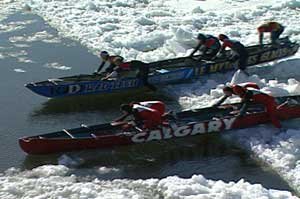
Each year, ice canoeists celebrate the bravery of those who used to deliver mail and supplies along the ice-clogged St. Lawrence River in winter, with one of the most grueling events on earth. In open boats, they battle their way over ice flows, through slush, across open water, and beat their way against high tides to cross from Québec City to Lévis on the opposite shore, and back again.
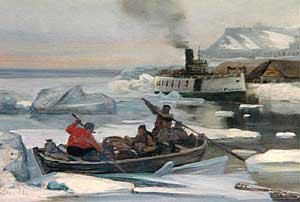
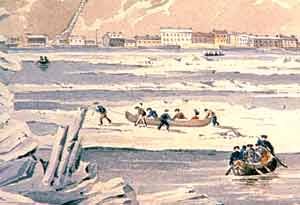
The annual ice canoe race evolved out of a long tradition, unique to this part of the world. For hundreds of years, the St. Lawrence River was the only route connecting the farms and settlements strung out along its banks and islands. In summer, boats plied the river, and in winter, settlers crossed the ice bridge by sleigh. But in early winter, before the river froze solid, the river became a treacherous mix of water and floating ice. The same conditions occurred during spring breakup. By the end of the seventeenth century, the Québeçois had developed heavy wooden canoes that could be alternately dragged across the ice, or paddled on open water. The exploits of the canotiers de glace, the ice canoeists who braved the ice-clogged river to carry food, medical supplies, mail, and passengers to the islands and isolated settlements became legendary.
These days, the broken-ice conditions for ice-canoes occur all winter long, thanks to icebreakers that keep the shipping lanes open all year round all the way to Montreal.
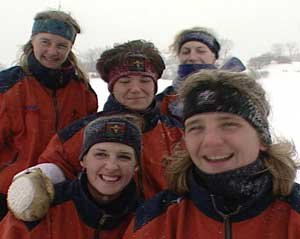
This program will explore the background and traditions of this grueling event as it continues to evolve, and we'll find out why anyone would want to participate. Mario Ouellett, the President of the Ice Canoe Association, explains the history and the main components of the race, and we follow several teams as they prepare and train for the annual race. |