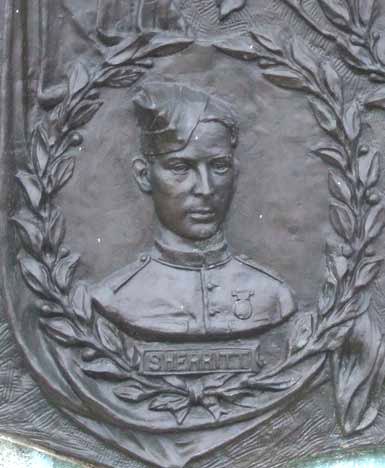
Noh Canada! - The Boer War had no truck with hypocrisy. No pretense that Canada was under attack by the threat of insurgents in a far away country. No homilies on monuments that "He died for Canada," when none of them did, or even intended to!
Canadians signed up, and died, in service solely to the forces of imperial war against the "Fuzzy-wuzzies," those poverty-stricken, Third World tribesmen - though the poor Boer farmers happened to be white - so beloved by Queen Victoria's fighting machine. They were "Killed in Action" in a conflict specifically called the Anglo-Boer War, a race war, that pitted the Anglos against the Boers, at a time when it was popular for one race to impose supremacy over other "inferior" races. It was something, in print and practice, that the British race prided itself on being good at.
The monument is not a testament to great Canadians but great Victorian imperialists, a page in History that is part of all of us, but not one, one would have hoped, that we would care to repeat in modern times. Luckily Canadians have matured in a hundred years. Who would even dream that Canadians in our day in age would join an army of white crusaders in a campaign against non-white Fuzzy-wuzzies in a Third World backwater because they were - follow me on this - a clear and present danger to Brantford, the hometown of Osborne, Sherritt, and Builder?
Spion Kop
Hamilton does not really have the Battle of Spion Kop properly shown. The British did not fight up the hill but had snuck up at night and dug in on top before the Boers knew they were there. It was a bad hilltop because it exposed them to fire from several surrounding hills. Actually it was the Boers who stormed up the hill, guerilla style, and forced the British off it the following night. But that would hardly make a great panel.

Lt. Osborne, serving, like many Canadian officers during the Boer War, in a British regiment, the Scottish Rifles, was among the hundreds of British soldiers who died on top of Spion Kop, on January 23, 1900, during one of the British Army's horrific defeats in the early part of the war.
His name is inscribed on the pillar at the far end of the trench in which he fought and which became the grave where he lies among his regimental comrades.


 Great Canadian Heritage Treasure