| Scared Absolutely Shitless...
I'm a tough guy, hardly easily frazzled. I have faced death - real death - a number of times in a variety of remote wilderness mishaps, in summer, in winter, on land, and on the water, and escaped a fatal reckoning only because someone kept watching over me. I've had unnerving close calls overseas.
So I have been scared - very scared - a number of times in my life.
In Uganda, when a Black African in rags, whom I did not know, leaned into my car door window in remote northern village, and snarled into my face, "Comes the revolution, I'm going to slit your throat."
In Canakale, Turkey, in a small hotel when someone tried to pry into our room at night. We were petrified, waited till the coast was clear, grabbed our backpacks and ran for our lives into the night...
In Istanbul, in the crowded streets of the old market, where I turned to hit a guy on the back with my fist - the only person I have ever hit in my life - who in passing had groped up my wife's skirt. He and his five friends turned to take me on... One against five; not good odds. Till nearby shopkeepers shouted loudly in Arabic, and the young thugs turned away.
In South Africa, when everyone I met told my what I was doing was insanity - driving the rural areas alone with my wife, stopping my car - the second most hi-jacked car in the country - getting out, and flashing my video camera (while doing a documentary on the Boer War).
Every white man and woman I met in a two month period had a friend or relative murdered. Everyone, except me, carried guns for self-protection - I repeatedly saw them being openly flashed on the streets, at tourist locations, along the highway, in restaurants, or they showed them to me. A Black at a gas station leaned into my window, after seeing my car and the load I had inside, shook his head and solemnly intoned, inches from my ear, "You better be careful. Very careful." When I remet people again later, they genuinely marveled that I had not been hi-jacked or worse.
I stopped by the very remote rural tourist site - deathly empty as I drove up - where only weeks before a Polish man on his honeymoon, was murdered and his wife kidnapped and raped over a period of days before being set free. A bouquet of flowers marked the very murder spot.
Another woman told me how she and her boss killed a hijacker after he forced their car to stop on the main Pretoria highway and came up to their window brandishing a gun. They both cut loose with their pistols at the same time killing him. They were never charged with anything.
At a Ladysmith B & B, where I stayed a few days, the owner said the numerous murder stories we heard recounted around the breakfast table by businessmen staying over, were overblown. Yet the day before a neighbouring couple had been attacked in their house just after I was warned by a tourist operator, not to go to photograph a local cemetery as it was far too dangerous. Then to top it all off I found out that his own daughter's husband's father was murdered the year before.
Then a day later I came upon the scene of a car jacking, just moments after a woman in her car had just been abducted in the middle of town. A woman in hysterics told me she saw it happening; it happened to her mother.
Back in Pretoria, the police refused to accompany me to a cemetery I wanted to film. "Not possible; too dangerous for us," they replied when we asked. Hell the police were scared to go where I went alone with my wife... Which is why police stations I saw everywhere were surrounded by stone walls, topped by coils of barbed wire. Even in the downtown heart of big cities like Nelspruit. The same as all the houses in the better parts of Pretoria and Johannesburg. Some wire was electrified.
We got most scared when, of necessity, we broke the cardinal rule: Don't drive at night. I'll never forget the blue flashing light that followed us... So finally we were going to fulfill all the dire predictions. An attempted high jacking was underway in the night. And there was no one to help us and the guy we had hired earlier for two weeks and who always packed a Clint Eastwood .357 Magnum was gone...
After trying to outrun the following car - another cardinal rule; don't stop for anyone but head for the nearest police station - and avoid possible death in the dark, we stopped. In the gloom I looked at my wife helplessly, wondering if this was it for us. Suddenly a black face loomed up out of the pitch blackness of night. Not a hijacker. It was just a cop who wanted 1,000 rand as a bribe for not charging me with something. We gladly paid. Hell we had our lives...Then there was...
Still, I was never as scared as I was in Ontario, in Ipperwash, in December 1995, when I was totally petrified with fear. A cold wash came over me like I have read about but only experienced once in my life. In Canada; in Ontario. At a beach and camp where I had wonderful childhood and teenage memories.
 |
| Canadian Indian Dudley George, a jokester, much beloved by family and friends, was one of a number of Indians who have been killed because of Canadian police racism |
It happened in 1995, while I was researching the killing of an Aboriginal, Dudley George, by the Ontario Provincial Police.
We were the only media allowed into Camp Ipperwash in the months after Dudley was shot Sept 5, 1995. Other media, outside Indians, and other whites, were barred from access by the Indians inside the barricaded camp.
The mainstream media didn't care, anyway, as journalists and whites everywhere believed the Indians got exactly what was coming to them for shooting at cops. So end of story; no story.
In our interviews with Indians who had been present when Dudley was shot near midnight, the same story kept cropping up, that the day before the murder of Dudley George, the families, teens, children, women with babies, etc. were sitting on picnic tables late at night having a good time. When suddenly OPP officers - apparently they had murder in their hearts - stormed up in police cruisers three abreast, and without warning, crashed into the tables, scattering women, children, babies, and men in all directions.
Wild screaming, yelling, pandemonium everywhere. So the story went, anyway...
When, ten years later, I started to tell this story to the Ipperwash Inquiry lawyers and investigators, who sat for two days in my house, looking at hours of historic video tape I had shot in the months after the shooting (the only video ever shot behind the barricades of Camp Ipperwash) I was rudely interrupted by Rick, one of the group, who stopped me, abruptly, as I started to tell this story to the four Inquiry people present.
"It never happened. We've heard this story. And investigated it. There's nothing to it. Forget it, it's nothing."
He obviously did not want me to continue and neither did anyone else.
The other lawyers, Derry Millar and Susan Vella, said nothing, but looked away. Clearly, they were onside with Rick. Absolutely weird, we thought.
Just what the hell were they all doing in our house?
This took us aback. Some kind of investigators; some kind of inquiry. They don't listen but tell respondents what to think, how to proceed, and what to tell. And when to stop. And what not to tell.
 |
| RCMP Inspector Rick Moss, standing on guard for policemen everywhere |
Here Rick took a strong lead in prejudging and imposing his mind set on the evidence he was supposed to be gathering for the Inquiry with an open mind. Some listener! Just what the hell was his agenda? And the group's?
The obvious clarification came later, when - surprise! - we found out that Rick was not a lawyer like the others at all, but was in fact, an RCMP officer, Inspector Rick Moss.
Unbelievably he turned out to be the Ipperwash Inquiry's "Lead Investigator," a job in which Justice Linden wrote he "ably and professionally supported counsel."
In other words - what else is new? - a cop running interference for the cops. It was an utterly dumb move for the Inquiry to hire a passionate cop in harness, to investigate possible criminal deeds by other cops, that included OPP, CSIS, military police, even possibly an RCMP officer or two, or more. The Inquiry was supposedly set up to find out this kind of stuff, and who was guilty of criminal behaviour.
Now Right front and centre, someone was running interference to suppress evidence.
It was a classic case of what happens to evidence, and truth, and dare we say it, justice, when dumb investigative decisions are made and the fox is put in charge of the hen house.
Whoever picked or approved Inspector Moss as any kind of fair-minded investigator, instead of selecting an independent civilian who did not come with a mind already prejudiced to be on the side of the cops in the story, was dumber than a post.
(In an interesting Freudian slip the Inquiry does not list Rick's name or his picture anymore, just saying, in a one liner that the RCMP "provided investigative services." Hell, it was plain as day to us, that Moss was running interference, and anyone with half a brain could have predicted that, the day they hired him.)
So it was later that I realized why he had attacked me so quickly and rudely. In fact I had earlier prefaced my remarks to the group with stories of anti-Indian racism by RCMP, that I had personally witnessed, or were told to me by RCMP officers - who were personal friends - themselves, in the many years I had lived in remote Aboriginal villages in the Canadian north.
In fact it was exactly this long background and knowledge in RCMP Indian policing which made us alone, of all the mainstream media, to question the honesty of the police, after the shooting, and why we were the only ones interested in investigating the truth of events in the fall and winter of 1995. When the mainstream media had, long ago, stopped publishing any articles on Ipperwash.
My stories - like of the RCMP constable who had shown me his huge signet ring which he bragged he filed to a razor sharp edge and chuckled that "it took seven stitches to close the wound after I hit that Indian," had obviously pissed Rick off, big time, and he struck back at me the first chance he got, hoping to shut me off from telling about another "hate crime" carried out by police.
 |
Derry wasn't smiling then... |
No wonder Derry Millar and Susan Vella looked away in embarrassed silence as I started to tell this story.
Unlike me, they knew Rick was RCMP, and they didn't want to hear more "bad" police stories in deference to their colleague sitting on the couch beside them. And they clearly weren't happy that I persisted with what they clearly considered an act of "social gaucherie" on my part.
Neither asked questions or prompted me to go on. Clearly neither wanted to overrule Rick's obvious demand for me not to continue with my story. To us it seemed clear: the cop seemed to run this Inquiry.
His colleagues were mute to a fault while they were being paid millions to conduct an inquiry by supposedly listening to all the people who had relevant facts.
And who could match our 73 days of on-site research, in the months after the killing, as the only media allowed behind the barricades at Ipperwash, and our hours of video interviews with the victims of the police attack.
Or our key role when, on September 8, 2025 at SIU headquarters, we insisted the agency re-activate a second investigation, just as it was about to close the books on its first, without charges against any cop, at a press conference it had scheduled to make the announcement as mandated by provincial law, on Dec. 11.
This failure to report on an investigation within the mandated 90 days was never explained in the media which was dumbfounded a week later when the SIU made no expected announcement at all. The mysterious silence is now explained publicly, for the first time.
 |
Susan wasn't smiling then... |
In spite of Rick's dismissive and rude interjection, and Millar and Vella's obvious discomfort, I persisted with my story... I owed it to Truth and the Stoney Pointers of Ipperwash.
Of course I didn't believe the cops would crash their cruisers into families on picnic tables at midnight. I'm a properly raised, well educated white guy, like Vella and Millar. Cops don't do that where I, or you, come from. Right...?
But then neither you, nor they, have spent eight years totally isolated in remote Aboriginal villages among only a tiny handful of whites, like I have...
Still, I ignored the story line of the picnic tables, and went looking for more believable stuff. But it crept creeping in, at different times, from young and old.
Until, being a historian, it suddenly struck me: what about evidence? There would be evidence of such an event, with automobiles smashing picnic tables. Wouldn't there? Smashed up tables...
But the murder site, where the picnic incident supposedly happened, and where I had been many times, was cleared. There were no tables there or remnants of tables.
And it was now a full four months since the event. What evidence of police brutality would there possibly be this late on?
Still... Without telling anyone, my wife and I began to drive around, big time, to look for banged up picnic tables everywhere, that might fit the bill, but found nothing.
So we decided to go to the Ministry of Natural Resources compound in the nearby Pinery where they stockpile all the park tables from the area during the winter - it was now December. Perhaps the tables were there. Piled up or getting fixed.
We drove to the Pinery and walked the compound, checking hundreds of tables for signs of trauma. Like what one would expect if a car forcefully hits heavy picnic tables. Broken 2 x 4s, smashed seats, broken legs, chunks ripped out, etc. We tried to imagine.
But we could find nothing that could remotely fit the bill.
We had little choice but to conclude all our respondents were just mistaken for some reason.
Probably the result of hysteria.
I mean how would you feel if your family was having a midnight picnic when 100 cops suddenly loom out of the dark and cut loose with automatic weapons and fire on you and your kids?
So no evidence; no story. It was as simple as that. (go to above right)
|
It was now getting towards twilight so we turned for home.
As we drove past the turn-off, down a side road, to the remote murder site - it's what the Indians called it; court findings later would prove them to be correct - where we had been many many scores of times, something made me turn in, just one more time.
I stopped beside the memorial of boughs to Dudley and tried to conjure up, again, the scene of picnic tables there, of families laughing, and then of OPP cruisers coming in and smashing them to smithereens, kids flying in all directions, screaming, and women shouting. And cops, what else is new, probably laughing...
But, I mused, all just another fanciful historic conjecture that would disappear in the mists of time. Not proven... Not provable...
I turned away from the murder site, and followed the road out, taking the same route along which the police had fled in panic after they had fired off hundreds of rounds of automatic fire into the night - often, it became clear years later, at each other. The shooting had frazzled them so much they ran, scared shitless, for their lives... from each other.
No one lived along this remote beach road. On one side was just bush, on the other some beach cottages that had been empty for months after the shooting, the owners scared too shitless to return. No one was about, as far as the eye could see. We met no cars on this lonely road. None passed us.
I tried to picture the scene of pandemonium on the road ahead of me that night... Over 100 heavily armed and utterly panicked OPP officers jammed into a narrow road. Running wildly away from the Indians, shouting in a frenzy, their hobnail boots pounding on the pavement; shields, guns, metal batons, clashing against each other. Utterly unbelievable... but what witnesses said they saw, and court testimony revealed.
200 yards on I came to an open parkade in the bush, which I knew was where the police had parked their St. John Ambulance command trailer from which OPP commanders had directed the armed assault on the picnicking Indian families.
I stopped to take in the scene, one more time.
And then I got a shock...
 There, piled up on the side, were some dozen dark brown provincial park picnic tables. There, piled up on the side, were some dozen dark brown provincial park picnic tables.
Not 200 yards from the murder site.
Naw, it couldn't be. It wasn't possible.
I decided to get out and have a closer look.
I got the shock of my life.
I had found the evidence we had spent hours and driven miles to look for. Right in our back yard...
 The tables had four and five inch legs snapped in half, two by six seats broken in half, table tops were broken apart, and everywhere huge chunks of wood had been gouged out of planks. Everywhere the freshly exposed garishly yellow wood laughed at me, set off glaringly against the dark brown paint. The tables had four and five inch legs snapped in half, two by six seats broken in half, table tops were broken apart, and everywhere huge chunks of wood had been gouged out of planks. Everywhere the freshly exposed garishly yellow wood laughed at me, set off glaringly against the dark brown paint.
I couldn't believe it. These tables had obviously been smashed violently apart by some powerful force.
 The conclusion was inescapable. The Indian men, women, and children, had not made it up; they didn't imagine it; they had not lied. The conclusion was inescapable. The Indian men, women, and children, had not made it up; they didn't imagine it; they had not lied.
Instead they had given Canadians an insight into the state of Canadian policing.
Clearly OPP cruisers had smashed into them, as they sat on these very tables with their families, at midnight, when the media were all asleep...
Servile Toadying Mainstream Media - In fact, every bit as racist, and what has to be the lowest point in Ontario - if not Canadian - journalism, has got to be the utterly repugnant "herd instinct" of the sleeping mainstream media on this story of the gross human rights abuse of a non-white minority population, and how it played a key role in perpetuating this story of systemic racism against Canadian Indians, with no one doing investigation or publishing articles on the story for many months after the shooting. All mainstream media journalists mindlessly trumpeted the racist and false police line, of shooting, hostile, law-breaking Indians. Articles only started to appear again, months after we escorted the SIU behind the barricades in Feb. 1996, and its investigators started reporting their findings from its second investigation.
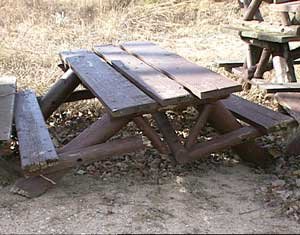 It was pretty clear that police racism was so deeply ingrained and the fear of consequences so remote, that they just brazenly moved the tables only a couple of hundred yards from the scene of the crime. It was pretty clear that police racism was so deeply ingrained and the fear of consequences so remote, that they just brazenly moved the tables only a couple of hundred yards from the scene of the crime.
That's just like the local Good Ole Boy southern US sheriff accidentally dropping his badge at the site of a Ku Klux Klan lynching in the 1930s, saying, "Hey, no problem. I'll just buy another one."
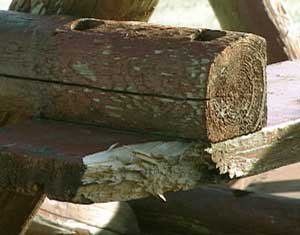 They too left the evidence of their viciously racist attacks against Indian women, teens, children, babies, and men, right beside where their command headquarters had been. None thought it was a problem. No superior officers could foresee a problem. They too left the evidence of their viciously racist attacks against Indian women, teens, children, babies, and men, right beside where their command headquarters had been. None thought it was a problem. No superior officers could foresee a problem.
Unbelievable... but true.
And this was Canada in 1995. Not the American south in 1930.
 I was literally shaking. I just could not believe what all this meant about Canada in 1995, Ontario, the state of Canadian policing, the kind of country Ontario is for Indian people, and how white people like me just have no clue about the degree of systemic racism that pollutes civilian life in Canada for Indian people, or non-white minorities in general. I was literally shaking. I just could not believe what all this meant about Canada in 1995, Ontario, the state of Canadian policing, the kind of country Ontario is for Indian people, and how white people like me just have no clue about the degree of systemic racism that pollutes civilian life in Canada for Indian people, or non-white minorities in general.
 Though I had known that "driving while Black" is one of the more common crimes in Canada. Though I had known that "driving while Black" is one of the more common crimes in Canada.
The light was fading so I quickly got out my video camera and took shots of the tables showing all the broken parts.
Then in the silence, and the fading evening light, I packed up.
 We were just stunned at our discovery in this remote little parkade. We were just stunned at our discovery in this remote little parkade.
"Let's come back tomorrow morning first thing. I want to get some better video, when there's more light."
We just couldn't believe it. For four months these tables, mute but powerful witnesses to one of the worst racist attacks of OPP officers in Ontario history, had just been left lying there, literally at the scene of the crime.
 We could hardly sleep, and got up at the crack of dawn, eager to document our historic discovery more fully. We could hardly sleep, and got up at the crack of dawn, eager to document our historic discovery more fully.
And turned up the remote road to the former police parkade
Again, like the night before, no one was about.
As we pulled up I got a shock I will never forget.
The tables were all gone...
I got a cold douche I will never forget, that suddenly washed over my shoulders and down my spine. My knees turned to rubber, I was so dumbstruck.
And now as the reality sank in of what I was confronting, scared. Absolutely scared shitless...
 The tables had been there for four long months. No one moved them. Parks probably thought: "hell, leave them for the winter, we'll move them during spring clean-up." The tables had been there for four long months. No one moved them. Parks probably thought: "hell, leave them for the winter, we'll move them during spring clean-up."
We had filmed them around 8 in the evening, the night before, and had seen no one. And no one had seen us...
We had told absolutely no one what we were doing the previous day, where we were going or what we were looking for. We had told no one what we had found in the parkade. In the whole world only my wife and I knew what we were doing, what we had found.
 Now, when we returned at 8 a:m the tables were all gone. Every single table, plank, and broken chunk. All the evidence of a police hate crime. Now, when we returned at 8 a:m the tables were all gone. Every single table, plank, and broken chunk. All the evidence of a police hate crime.
And again, like the OPP cruisers crashing these tables, the later killing of Dudley George, and now the removal of the tables, it was all done under the cover of total darkness. The Heart of Darkness.
It became obvious that someone had been following us surreptitiously, possibly CSIS, possibly the OPP surveillance operatives, or the RCMP, in the trees, since there were absolutely no vehicles we could see in the area. And none had been following us, as we watched.
 (Both the OPP and CSIS (Canadian Security Intelligence Service) had armed guerrilla scouts in camouflage hiding in the bush spying on the Indians all during the Ipperwash confrontation, many of them quite illegally inside Ipperwash Park itself. Both OPP and CSIS denied this illegal activity by its members but lots of evidence recounted by Stoney Pointer's own security forces showed the police were lying about this as well.) (Both the OPP and CSIS (Canadian Security Intelligence Service) had armed guerrilla scouts in camouflage hiding in the bush spying on the Indians all during the Ipperwash confrontation, many of them quite illegally inside Ipperwash Park itself. Both OPP and CSIS denied this illegal activity by its members but lots of evidence recounted by Stoney Pointer's own security forces showed the police were lying about this as well.)
The OPP officers had repeatedly openly taunted Dudley: "Dudley you're going to be the first who gets it." They were as good as their word.
Filled with race hate, they deliberately targeted him and murdered him at night.
Now they were clearly targeting us and our activities. Was there a scope trained on me as I stood there?
Who would possibly think what I was doing was a threat of such major proportions? What were they afraid of?
How far would they go to prevent our story from getting out?
I clearly felt a rifle targeting my back... The parkade was remote, totally surrounded by brush. No one could see what was happening there. No one was around to help us.
It was the first time in my life I felt overcome by wholesale terror.
Now I had personal experience of the kind of fear that Canadian Indian women, teens, children, and men face from the white police forces that often and routinely, victimize them unjustly and illegally.
In fact the OPP had forced Indian women, who had nothing to do with the protest group, face down into ditches and on to the ground, miles from the site.
I could hardly hold the wheel, I was shaking so badly as we peeled rubber away from an assassination site where they had shot Dudley to death and 16 year old Nick Cotrelle in the side.
I had no interest in becoming number 3.
The Sound of Silence - After I completed telling this story to the Ipperwash Inquiry, sitting in my living room, and showed them the pictures - clear, hard-core evidence of a police hate-crime that added another powerful and compelling layer of police wrong-doing against Indians - there was not a single question from Rick or any Inquiry lawyer as a follow-up on any level.
Clearly Rick's earlier objections to me telling this story had been totally demolished and exposed his Heart of Darkness. The silence was telling. And neither Inquiry lawyer wanted to ask anything because it would have embarrassed their colleague. Establishment loyalty took precedence. Not justice for Indians. Or rooting out racism in the system.
That's how interested this Inquiry was about seeking out information about potential police criminality. But it published lots of stuff from white cottage owners complaining about Indian criminality, break and enter, drunkenness, theft, vandalism, harassment, etc. But the OPP got a pass on this heinous midnight cruiser attack on Indian families. Establishment racism always gets a pass...
You Go Girl - It would not be for another ten long years before Susan Vella and Derry Millar would come on the scene and start billing tens of millions for themselves and their law firms.
Shabby Chick - I might add that Susan Vella summonsed me to appear before the Inquiry in Forest, Ontario, which I did. But she deliberately shut me up. Like Rick had tried in private - running cover for Establishment and police wrong-doing - she did in public.
She steered me deliberately and totally away from introducing this story or discussing this evidence of police human rights abuse in any way before the media and the inquiry. She was clearly interested in protecting the police as much as she could. She was unhappy with my story; she was unhappy with me. As a result of her running interference, like her RCMP colleague had, this story has never been discussed by the mainstream media or exposed to the public.
Inquiry Witness Per Diems - In fact, to punish me for my insubordination, Susan Vella refused to pay me even the minimal amount of per diems to appear there that she paid all other witnesses, or to pay me a nickel for gas to get there, as others got.
And that was after she had spent two whole days at my house watching many of the high quality videotaped interviews I had conducted with all the principals who had been on site during the shooting. In fact one of the most powerful witnesses had since died and was no longer available to her. But she got his gripping eye witness testimony from my videotapes.
She learned from my valuable historic tapes who all the key people were, and what they had said, ten years before, only a few months after the shooting, during the 73 days of totally unpaid work we spent doing research and filming behind the barricades at Camp Ipperwash.
While she drew on a huge paycheck and expense account, she wrote furiously, the whole time, cribbing all my hard work and copying down all the questions I had asked the men, women, and children, and all the answers they gave me.
She had the whole script for the Ipperwash Inquiry, detailing the people, places, and events of September 1995, in her pocket when she left my house.
Multi-Million Dollar Justice - The White Establishment made a ton of money - what else is new? - from an Inquiry that dragged on for years bringing its lawyers and their firms tens of millions of dollars, while the family of Dudley George had to agree not to sue for a single cent, and got not a single nickel for wrongful death compensation of any kind.
The White Guys have a great system set up: they always win; the Indians always get screwed...
The other Indians of Ipperwash - old women brutalized, mothers forced down on the ground, children terrorized, a teen shot, a councilor beaten to a pulp, none of them got not a nickel of compensation either.
And nope, not even a single word of apology to Bernard George, from the OPP Commissioner, for his officers beating this Kettle Point councilor close to death, even though the Inquiry's Justice Linden recommended it.
Julian Fantino, former OPP Commissioner (the commanding officer), and now a minister in the Harper Government, whined that he "wanted" to do it but missed the chance because Bernard subsequently died... So - what else is new? - delaying things, a common bureaucratic tactic, helped solve an unpalatable problem for a man and an organization of which far too many members stem from the racist Heart of Darkness in Harper Country. And posturing to make it look like Bernard was guilty for the racist lapse, not Fantino.
Racist Heart of Darkness - In the ultimate embarrassment that exposed the overwhelmingly awful depths of systemic racism in the White Establishment, the mainstream media exposed the awful truth that Bernard was not dead at all but an Aboriginal councilor in his town. And that Fantino was just - what else is new for a former Canadian para-military leader? - lying through his teeth to create truths that have no relationship to the reality out there.
A bigger shock - racist lying politicians have led Canadians for years - is that it took three whole long weeks for this story to come out in the mainstream media. And the main culprit: the Toronto Star's Peter Edwards, who made a reputation as a so-called publicist for Ipperwash and wrote a book on it. Why was he not publicizing this story three weeks ago, instead of breaking it, three weeks late?
Truly Unforgivable - Well, he's vastly improved his reporting speed on Ipperwash. In 1995-96 he had an unforgivable time lag of 7 months, after the racist human rights abuse had happened, before he started to publish about the truth of what happened at Ipperwash. And then only because of new revelations of the second SIU investigation which we had jump-started on Dec. 8, 1995. Edwards would start publishing the following April, 1996.
|

 Great Canadian Heritage Treasure
 When a human being picks up sand as a souvenir, like General Rommel did in North Africa, or a stone, of a historic - people related - event, we begin the classification proper of stone relics.
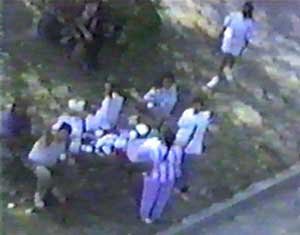 Here are women, children, babies and men picnicking, only yards from where Dudley was murdered. The OPP even knew the names of the people they were targetting. Right is Judas (waving) and Gina George and their kids and friends who never dreamed they were only hours away from being shot at in the worst act of police violence against Indians in Ontario's history.


 His research uncovered the institutional racism, the illegality, the media complicity, and the scandal of it all. He reported his findings to the Ontario Special Investigations Unit (SIU), which was two days away from a press conference announcing it would lay no charges against the police. He protested strongly, and promised to facilitate its access behind the barricades if it would abort the news conference, and restart its investigation. It agreed. Its investigation, this time around, would lead to sensational charges against the police, and to a judge condemning OPP officers for repeatedly lying, and to find a cop guilty of deliberately shooting Dudley. Another inquiry exposed the racism of the Premier as well, and it showed that in modern Canada a racist from Harper Country could still become Premier of Ontario.
 An OPP surveillance video, shot only hours before the midnight attack that killed Dudley George, and shot only steps from where he fell, clearly shows unarmed Indian family members sitting on picnic tables.
 Right, an angry Robert Isaac stands by as Dave George throws rocks at a low flying OPP chopper which endlessly swooped in to take videos of Indian family picnics, sending clouds of dust and dirt into food, and terrorizing the babies and children.
 Like Dudley, Schwerner, Chaney, and Goodman - And the OPP lied in front of the cameras, exactly because they knew they had the mainstream media in their pockets and could get away with it. Because, let's face it, the Indians had nobody whatsoever - media included - on their side. Even the white liberals were publicly onside, for many, many, months, going on almost a year, in this story, with the racist cops.
 Canada's National Broadcaster - Edwards and the Toronto Star were at least better than the CBC, which cancelled our right to publish our findings on the National Broadcaster in December 1995, censoring us sternly with being "too much on the side of the Indians." And breaking its promise to give us the documentary if we only "got access" behind the barricades. Which, of course, no one else could do and we had done in spades. Too much so for the racist Heart of Darkness which also lurks among top echelon bureaucrats at the CBC.
  The OPP wanted to move the Indians out of the Park; Fantino wanted to move Bernard to the grave; Peter Edwards wanted to move them to - maybe into - Lake Ontario.
 OPP Site - Primed to Kill - OPP Perps - Right the day before the shooting, OPP officers taunting the Indians - safe behind the fence of Ipperwash Provincial Park, from which OPP were barred by law - to come out and fight on the road. It's the exact spot where Dudley George was warned he was going to "get it" first. He just laughed.
 OPP officers didn't give a damn who...
 OPP Site - Scared Shitless - OPP Perps - It's easy to see how a racist, human rights violation of such major proportions can occur. Take a bunch of uneducated, small town boys, with little or less cross-cultural experience, but with a predisposition for bashing heads, train them in violence, arm them with automatic weapons and metal batons, clothe them in helmets to wall them off from contact with their environment, put them in bullet proof vests - you know, against Indian gun fire -, bunch them up into a mob, turn them lose in total darkness, have them banging batons on shields, and send them out - ra, ra, ra - to "get the fucking Indians out of the Park."


 OPP Site - Scared Shitless - Indian Victims - Only hours after unarmed Indians had their families shot up by automatic weapons fire by some 100 OPP police, their women and children brave the racist guns of the police once more at the OPP command post site.


 They heard lots of OPP taunts against Indians, hundreds of gunshots, maybe even a ricochet or two, and the scared panting of Indian teens thinking it was their last day on earth.
 Right 14 year old Leland George crouched protectively on top of his dog on the floor of a bus, trying to shelter his pet from the fusillade of bullets, as they ripped through the glass and metal around him.
 14 year old JT Cousens was one of several 14 year olds on site hiding from the police fusillade of bullets.
  Right, all camoed up, and with murder in their hearts, some of the snipers - it could have been OPP, CSIS, RCMP, military MPs - who were everywhere in the woods around the indian demonstrators, just waiting for a reason to cut loose.