
Walter Alward occupies a special place in the history of Canadian art. His name is associated with the development of monumental sculpture, memorial architecture and artistic projects dedicated to commemorating historical events. The master’s works were distinguished by their scale, attention to detail and a desire to convey an emotional state through form, space and symbolism.
Interest in Alward’s work remains strong today. His works are regarded as monuments to a particular era and as examples of an artistic approach that combines sculpture, architecture and historical memory. The artist succeeded in developing his own distinctive style, thanks to which his works have become recognisable far beyond Canada’s borders.
Early years and the start of his artistic career
Walter Seymour Olward was born in Toronto and showed an interest in the arts and crafts from a young age. In his early years, he worked in workshops, where he practised decorative carving and designed elements for architectural projects. This practical experience helped him develop an understanding of form and composition.
Gradually, Alward began working on his own sculptural projects. He was drawn to themes of remembrance, heroism and public history. Even in the early stages of his career, it became apparent that the artist was interested in large-scale compositions designed for public spaces.
Within Canada’s art scene, Olward quickly gained a reputation as an artist capable of combining academic sculpture with emotional expressiveness. His works were characterised by meticulous rendering of figures, complex compositions and an attention to the architectural surroundings.
The Development of an Artistic Style
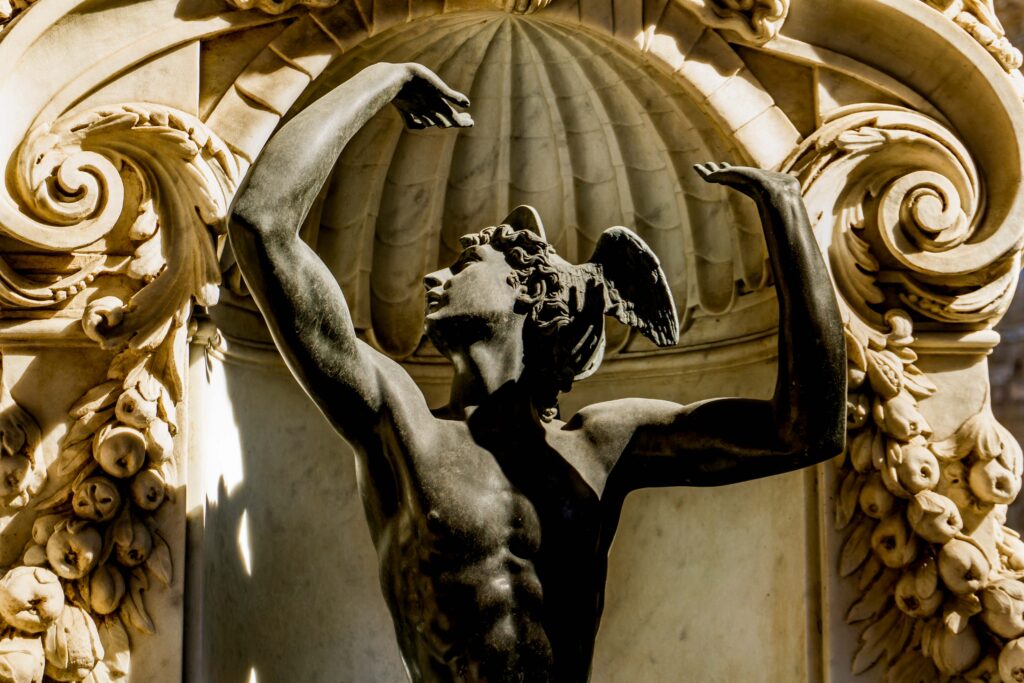
Walter Alward’s style was shaped by the European monumental tradition. Rather than copying existing designs, the artist sought to create compositions with their own artistic logic. His projects feature a combination of realistic figures and symbolic elements.
One of the distinctive features of his approach was his attention to space. Allward viewed a monument as part of its surroundings. Consequently, many of his projects incorporated architectural elements, staircases, columns and complex compositional lines.
The master attached great importance to human emotions. The figures in his sculptures rarely appeared static; their movements, facial expressions and body postures created a sense of inner tension. As a result, the monuments were perceived not merely as decorative objects, but as visual narratives.
The Vimy Memorial and International Recognition
It was the Vimy Memorial that brought Walter Alward his greatest fame. This project was one of the most ambitious of his career and is regarded as a significant landmark in Canadian memorial architecture.
Work on the memorial required many years of preparation. The artist paid attention to every detail – from the arrangement of the figures to the monument’s interaction with the surrounding space. The composition was created as a single work of art in which architecture and sculpture work together.
The central feature of the memorial is the emotional expressiveness of the figures. The sculptures convey a sense of loss, remembrance and inner tension. Yet the composition does not appear overloaded with detail. Olward sought a balance between scale and artistic restraint.
The memorial attracted attention both in Canada and beyond. Many art historians noted the high standard of craftsmanship and the complexity of the architectural design. The project cemented Olward’s reputation as a master of monumental art.
The Significance of Olward’s Work Today
Today, Walter Olward’s works are regarded as an important part of Canada’s cultural heritage. His monuments continue to attract the attention of researchers, tourists and art lovers.
Interest in his work stems from the history of memorials and the artist’s creative approach. Allward demonstrated that monumental sculpture can be more than just a decorative object; it can be a complex, emotionally resonant work of art.
Contemporary art experts note the artist’s attention to composition, symbolism and architectural space. These characteristics ensure that his works remain relevant to this day.
Comments are closed